MY VISION AS PHOTOGRAPHER
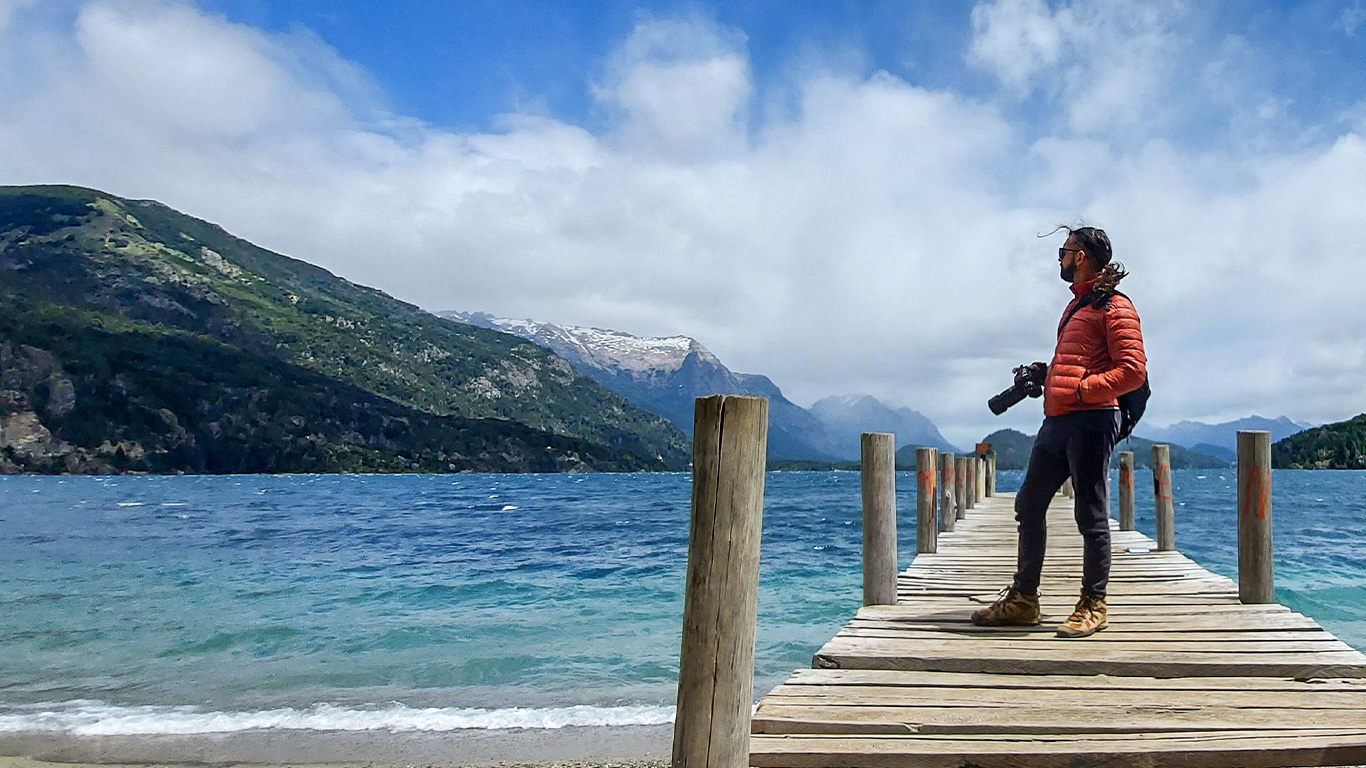
I consider myself a travel photographer because it’s the moment when I take my camera and lose myself with it. I’m not only traveling through places physically, but I also abstract myself with my camera and mentally journey into my own pocket universe. It’s the same kind of abstraction I feel when I paint in my studio.
It can be a long trip or just a weekend getaway. It’s the dimension of dynamism and constant change around me. It’s the sense of novelty that triggers my most developed sense, sight. It doesn’t matter if it’s a place I’ve already been to.
If I had to describe what kind of photography I do within travel photography, there are various intentions -or rather encounters- throughout the years that can trace a characterization. Using two pictorial concepts from art history, I would describe myself as a “Romantic” and “Impressionist” photographer.
First, I like to find beauty in small things—in those everyday corners that usually go unnoticed by most people. A detail that no one else has paid attention to, often catches my eye. It feels like a natural zoom-in of the gaze. Then comes the need to find the right point of view or the best frame to emphasize some aspect of that hidden corner, which is perhaps better appreciated from a particular angle or perspective. Beauty is everywhere, and finding it is exciting to me.
And if we’re talking about landscapes or wide spaces such as nature, towns, or cities, the concept of Romantic painting -and the relationship of human beings with nature or their surroundings- is definitely a concept with which I feel 100% identified when I want to capture wide and open locations. The vastness of landscapes and the force of nature, which masterfully developed by artists like Turner or Corot, which later knew how to continue Ansel Adams and Galen Rowell, among others, is another pursuit that draws me into abstraction.
I’m deeply passionate about witnessing atmospheric and light changes throughout the hours of the day. That interest was so well developed by the Impressionists. Their concept of painting was inherently photographic. Monet’s Rouen Cathedral series is essentially a photographic series of the same subject under different atmospheres of light -captured with brush and paint instead of a camera-. How light impacts an object according to its physical composition or the changes in ambient light are a dance between science and nature, fascinates me. The layers of various tones created between objects at different distances and the air’s atmosphere are a clear example of this.
On the side of form, I’m also drawn to textures, patterns, and geometries -whether hidden or in plain sight- that can be found both in nature and in human creations. This leads me to speak about the passage of time in architecture and objects -another theme that sparks not only attention but also admiration-. We could even say envy. Something that has survived so many changes and transformations in this world and yet is still there, resisting and transmuting. A kind of witness to the passage of time, something we could never attest to naturally. And as a millennial born in the ’80s, raised on Back to the Future, my way of time traveling -the idea that left a permanent mark on me- is to admire and portray that witness created by humanity to do what we ourselves cannot. That seems like another fascinating concept to portrait.
And if the artificial and the natural are juxtaposed, even better…
As for street photography and portraits, I like to capture the natural essence of people -the authentic, unique, unrepeatable moment, free from posing or staging. I don’t like to make people uncomfortable or ask them to participate- it feels invasive to me. It’s something I do only on rare occasions, though I must admit I really like the results. Maybe I should do it more often…
Street photography has a different dimension that I find highly appealing, and it inspires even greater admiration when I see it done by more talented colleagues. Probably because it’s the area in which I have the least practice. Perhaps it’s the most difficult and frustrating genre, due to its dependence on changing external factors, but at the same time it’s what gives it that sense of epicness, magic, and skill. It requires more practice and intuition than technique.
I think the best photograph for me—the one that would probably make me feel the most pride and satisfaction—would be any image that looks like a painting and deserves to be selected as a candidate for its oil version.
Of course, themes often overlap and share the same instant. But if I had to find one word to condense each of these aspects within travel photography, they would be:
Landscapes and nature: PEACE, SERENITY, and IMMENSITY
Architecture, objects, and people: TIME and SPACE
Everyday corners: BEAUTY
Light and atmosphere: the SCIENCE of COLOR
Because, in addition, there is added in me the dimension of learning how to represent that effect of light, texture, perspective, or form through oil painting. That’s when the passive and quiet work in the studio comes into play.
“WALKING WITH A CAMERA IN HAND IS THE BEST PLAN I COULD HAVE WHEN I’M TRAVELING.”